
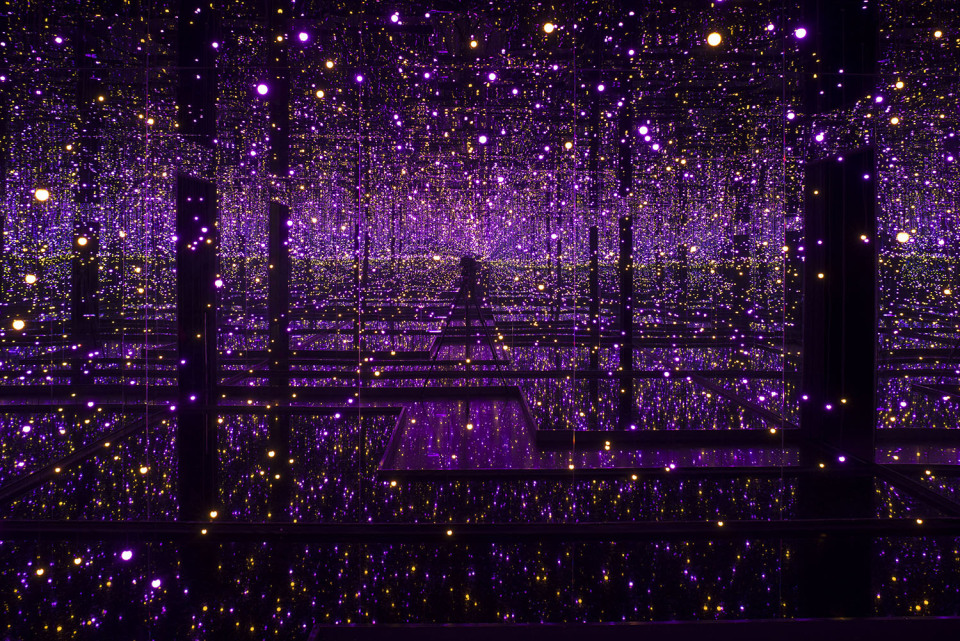
We enter her world seeking a photo, a moment of spectacle. We line up, often for hours, for our brief, scheduled immersion. The door closes, and suddenly, we are alone—yet infinitely multiplied. In Yayoi Kusama’s Infinity Mirror Rooms, the self you carried in, with its anxieties and its singular perspective, begins to dissolve. This is not an optical illusion. It is an existential proposition. For Kusama, this obliteration is not a threat, but a profound relief. It is the culmination of a lifetime’s work: an art born not from a desire to decorate the world, but from a visceral need to survive it.
Behind the now-ubiquitous polka dots and pumpkins lies a story of radical self-preservation. From a young age, Kusama was besieged by vivid hallucinations—fields of flowers that spoke to her, patterns that engulfed her. “One day,” she recounted, “I was looking at the red flower patterns of the tablecloth on a table, and when I looked up I saw the same pattern covering the ceiling, the windows and the walls, and finally all over the room, my body and the universe.” For most, this would be a terrifying descent. For Kusama, it became a creative genesis. She made a revolutionary choice: instead of fleeing the visions, she would command them. She chose to reproduce the very patterns that threatened to consume her—and in doing so, to digest them on her own terms.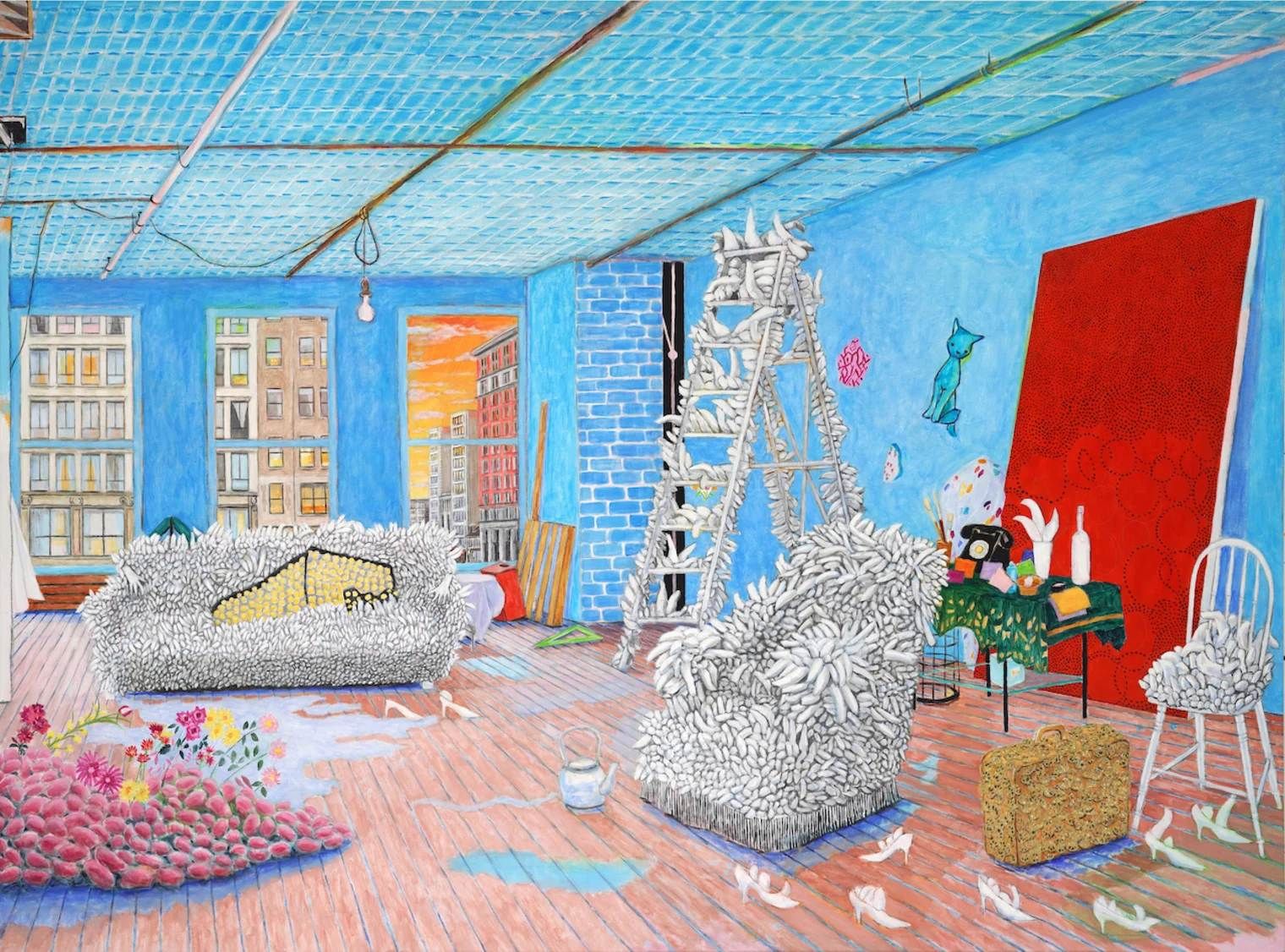
The polka dot, therefore, is far more than a playful motif. It is her primary weapon in a war against fear, a tool for the annihilation of the ego. “A polka-dot has the form of the sun, which is a symbol of the energy of the whole world and our living life, and also the form of the moon, which is calm,” she has said. “Round, soft, colorful, senseless and unknowing. Polka dots become movement… Polka dots are a way to infinity.” By covering canvases, objects, and eventually entire environments with these dots, she performs a magical, repetitive act: she swallows the solid, the separate, the lonely self into a cosmos of her own making. The dot does not decorate the surface; it erases the very idea of a boundary.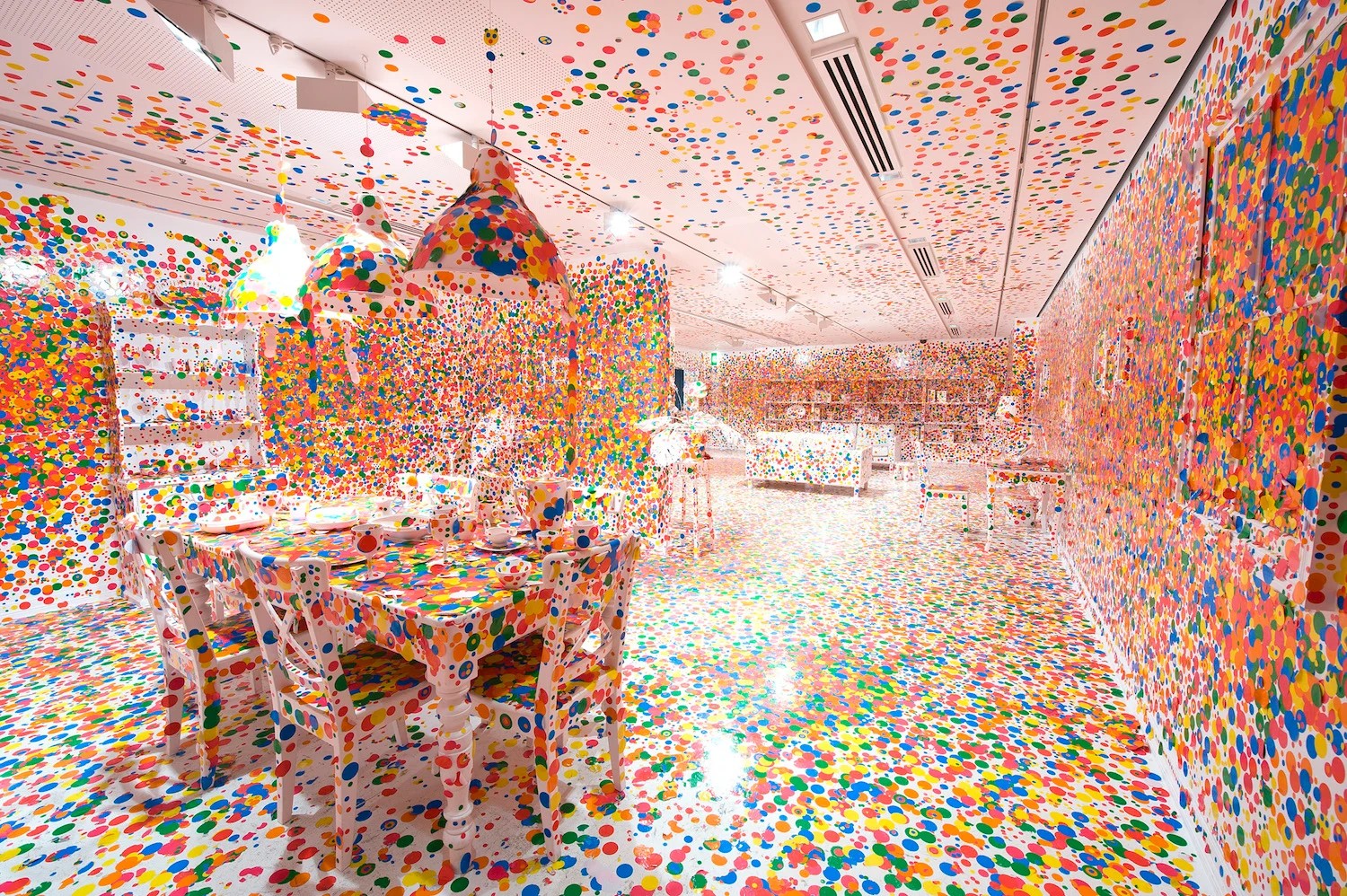
This personal, desperate strategy evolved into a collective offering. The Infinity Mirror Rooms are the ultimate expression of this. When we step inside, we are not just looking at art; we are inside Kusama’s mind, experiencing her longed-for liberation. The mirrors multiply our image until “I” becomes a pattern in a vast, shimmering field. Our solitude is reflected into infinity and thus transformed into a kind of connection—a shared, silent membership in something boundless. The anxiety of individuality softens. This is Kusama’s gift: she has engineered a space where we can safely practice the temporary dissolution of our own egos, a therapeutic release in an era where the self is endlessly curated, displayed, and defended.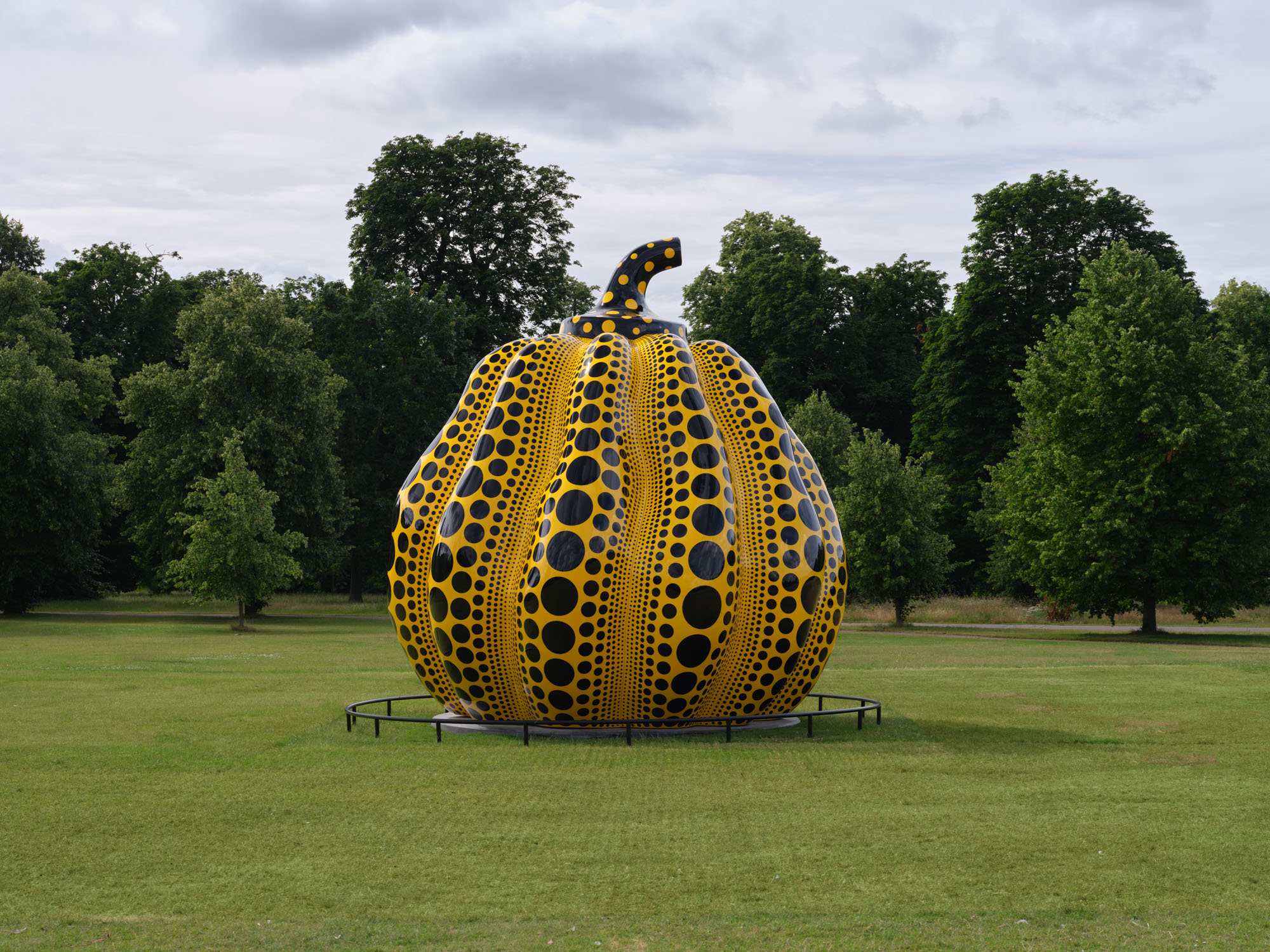
Her work extends this philosophy into the organic world. Her iconic pumpkins, with their robust, comforting forms covered in dots, are not mere still lifes. They are surrogate selves—humble, resilient, and pulsating with cosmic energy. “I love pumpkins,” she said, “because of their humorous form, warm feeling, and a human-like quality.” In them, we see the same principle: the solid form is both asserted and undone by the pattern, existing in a state of beautiful tension between being an individual thing and part of a vibrating whole.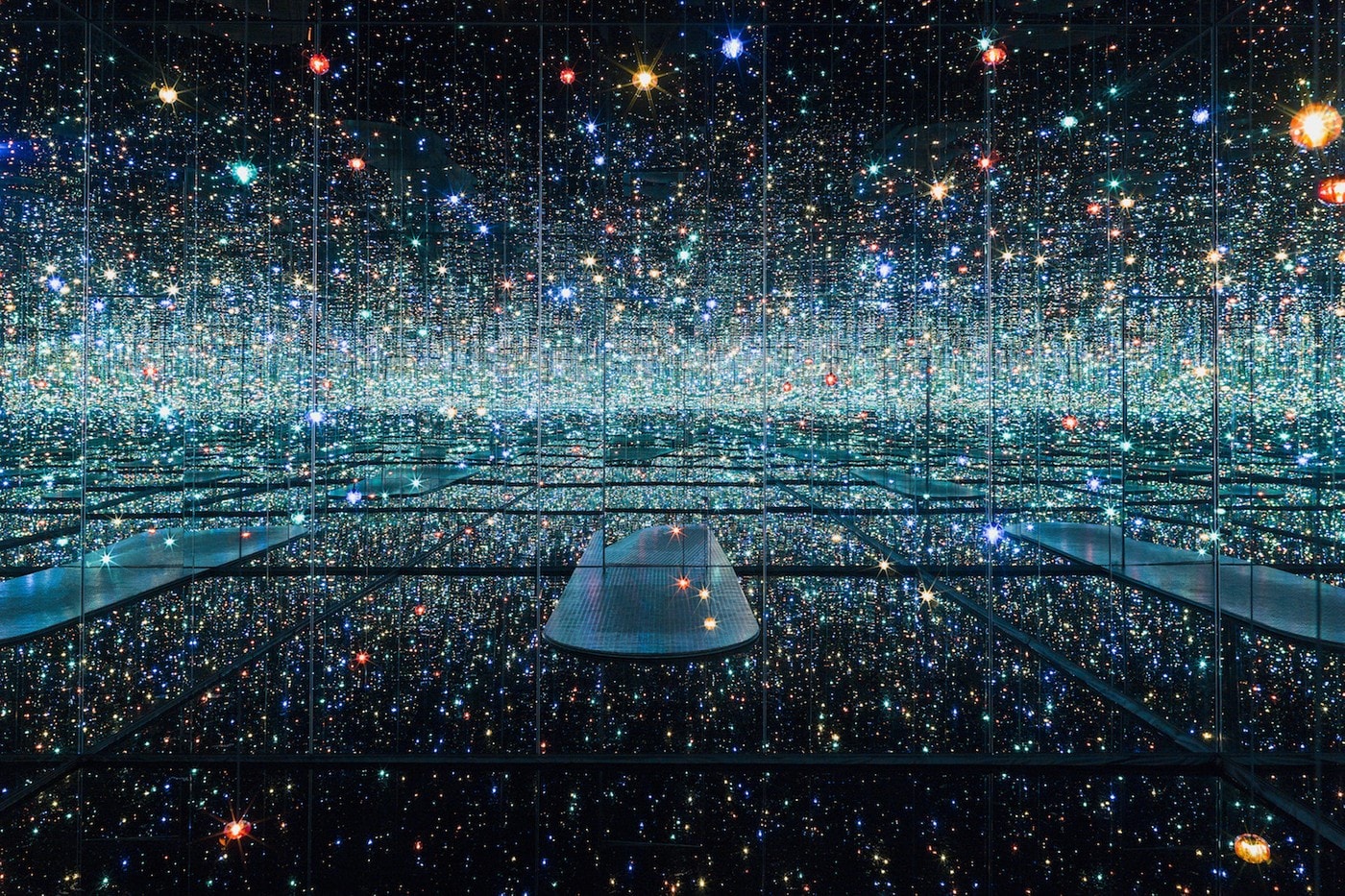
In a contemporary world frayed by isolation, anxiety, and digital fragmentation, Kusama’s universe offers a compelling paradox. It uses repetition—a symptom of neurosis—to create a sense of wholeness. It uses the annihilation of the self to propose a deeper form of communion. She did not simply make art about her demons; she built an entire cosmology from them, room by room, dot by dot. She turned a private pathology into a public sanctuary.
To experience Kusama is to witness a rare act of alchemy. It is to understand that the very things that threaten to unravel us—our fears, our obsessions, our profound sense of separateness—can, through relentless, creative courage, be spun into a vision of infinity. She does not ask us to look at her art. She invites us, for a fleeting moment, to disappear into it, and in that disappearance, to find a strange and healing kind of peace.