
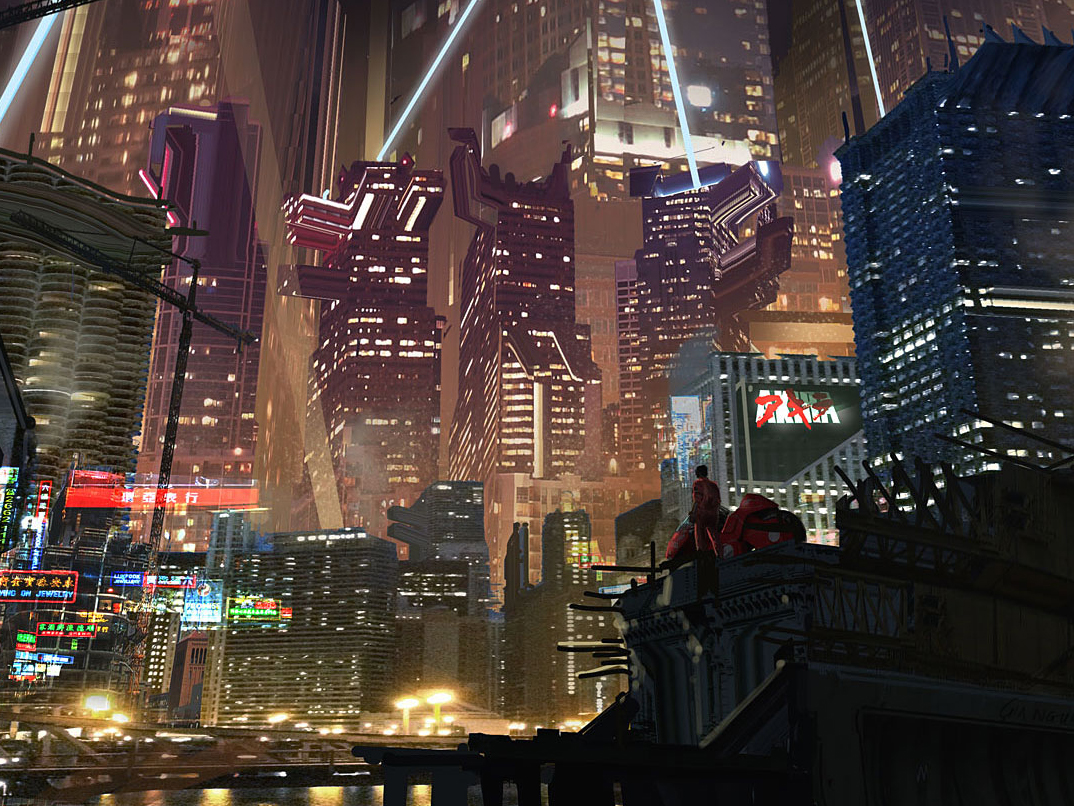
Few animated films have left a mark on global culture as deep as AKIRA.
First released in 1988 and directed by Katsuhiro Ōtomo, the film quickly became a landmark of science fiction animation. Its vision of Neo-Tokyo—neon-lit streets, restless youth, political tension, and experimental technology—felt radical at the time.
Nearly four decades later, AKIRA still feels strangely contemporary. New audiences continue to discover it, while its imagery circulates constantly through fashion, music, and design.
The question is no longer why AKIRA was important in 1988.
The real question is: why does it still feel relevant today?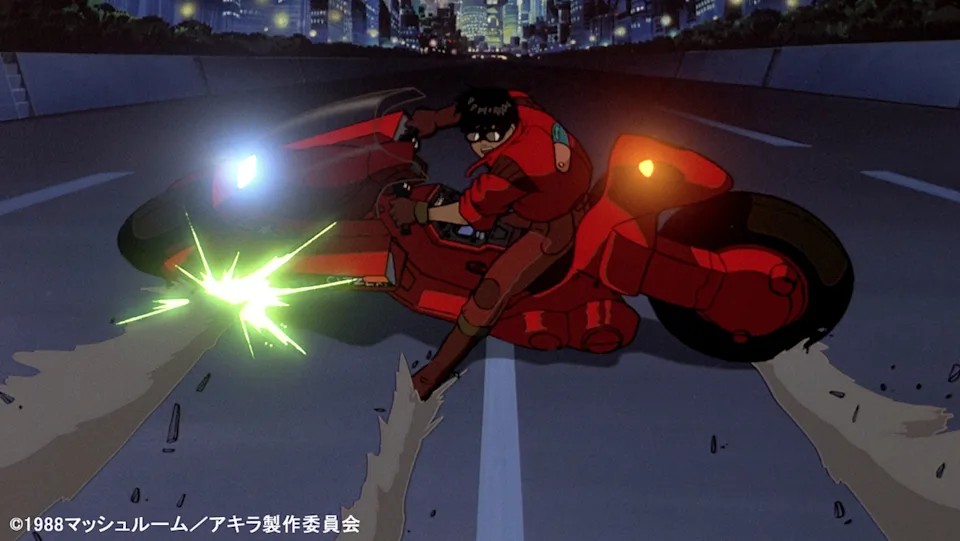
The Film That Changed Animation
Before AKIRA, Japanese animation was often viewed in Western markets as children's entertainment. Imported series like Astro Boy or Speed Racer defined the public perception of the medium.
Ōtomo’s film changed that almost overnight.
AKIRA presented animation on a scale rarely seen before: sprawling cityscapes, massive crowds, complex lighting, and explosive action sequences drawn entirely by hand. The film reportedly used over 160,000 animation cels, an extraordinary number for the time.
But what truly set AKIRA apart was its ambition. The story explored political conspiracy, psychological trauma, and the dangers of uncontrolled power. The relationship between Kaneda and Tetsuo—a fragile friendship strained by resentment and transformation—gave the spectacle emotional weight.
For many international viewers, AKIRA was the first time animation felt unmistakably cinematic.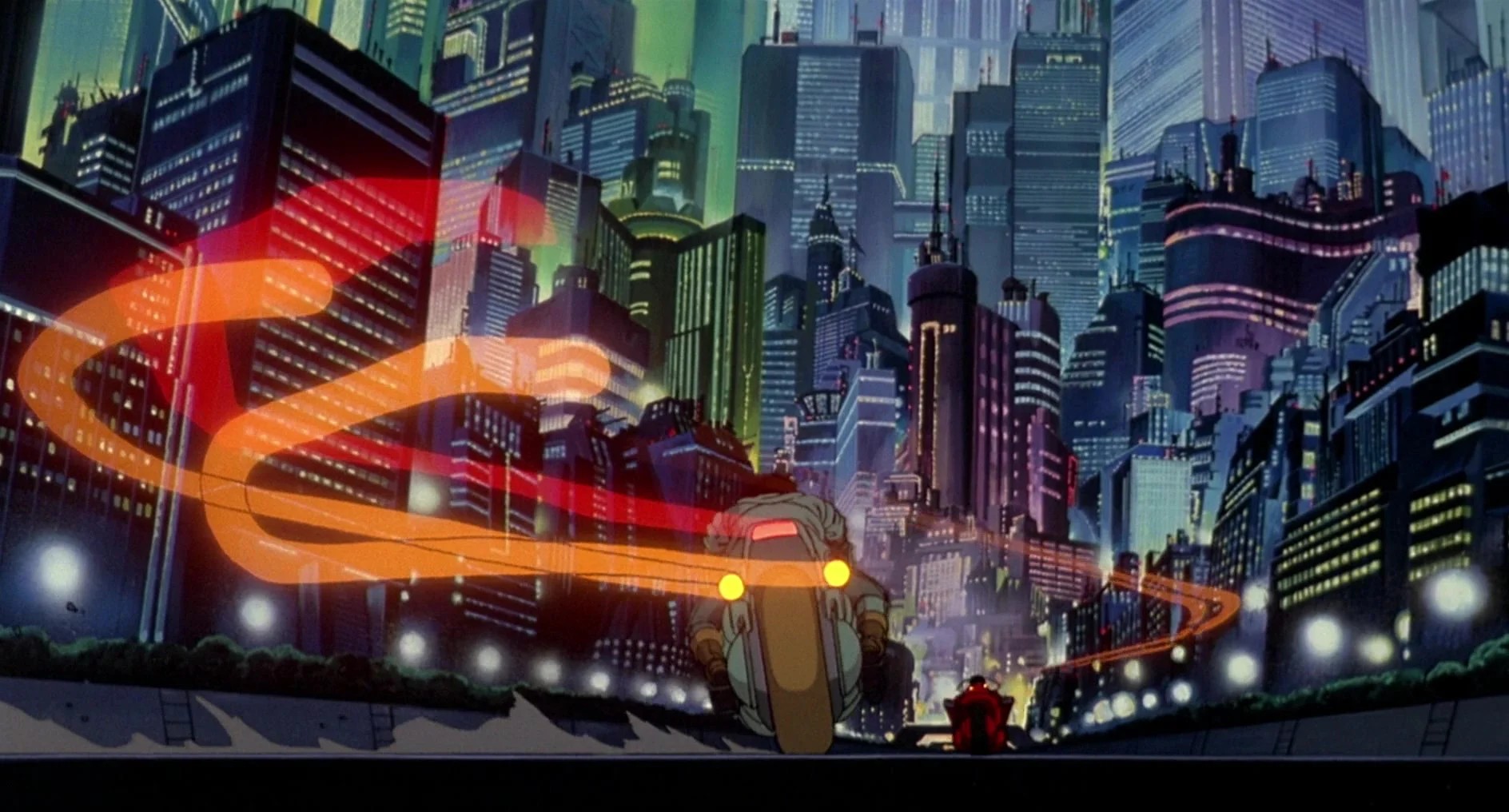
A Visual Language That Shaped Culture
One reason AKIRA endures is its unmistakable visual identity.
Neo-Tokyo’s glowing billboards, elevated highways, and endless urban density helped define the aesthetic of cyberpunk. Even today, countless films, video games, and graphic designs echo its visual language.
The influence extends far beyond cinema. Streetwear brands, album covers, and graphic artists frequently draw inspiration from the film’s imagery.
Kaneda’s red motorcycle jacket—marked with the iconic capsule logo—has become one of the most recognizable designs in animation history. It appears on fashion runways, in collaborations with global brands, and across countless fan reinterpretations.
In many ways, AKIRA helped shape the visual idea of what “the future” looks like.
From Manga to Global Phenomenon
Long before the film became a cultural milestone, AKIRA began as a manga series written and illustrated by Katsuhiro Ōtomo.
Serialized between 1982 and 1990, the manga expands far beyond the film’s narrative. It explores a vast political landscape filled with military factions, underground movements, and the terrifying consequences of scientific experimentation.
Ōtomo’s artwork was revolutionary. His pages combine precise architectural detail with explosive motion, creating panels that feel almost cinematic in their pacing.
The manga helped introduce global readers to the scale and artistic ambition of Japanese comics. Today it remains one of the most celebrated works in manga history.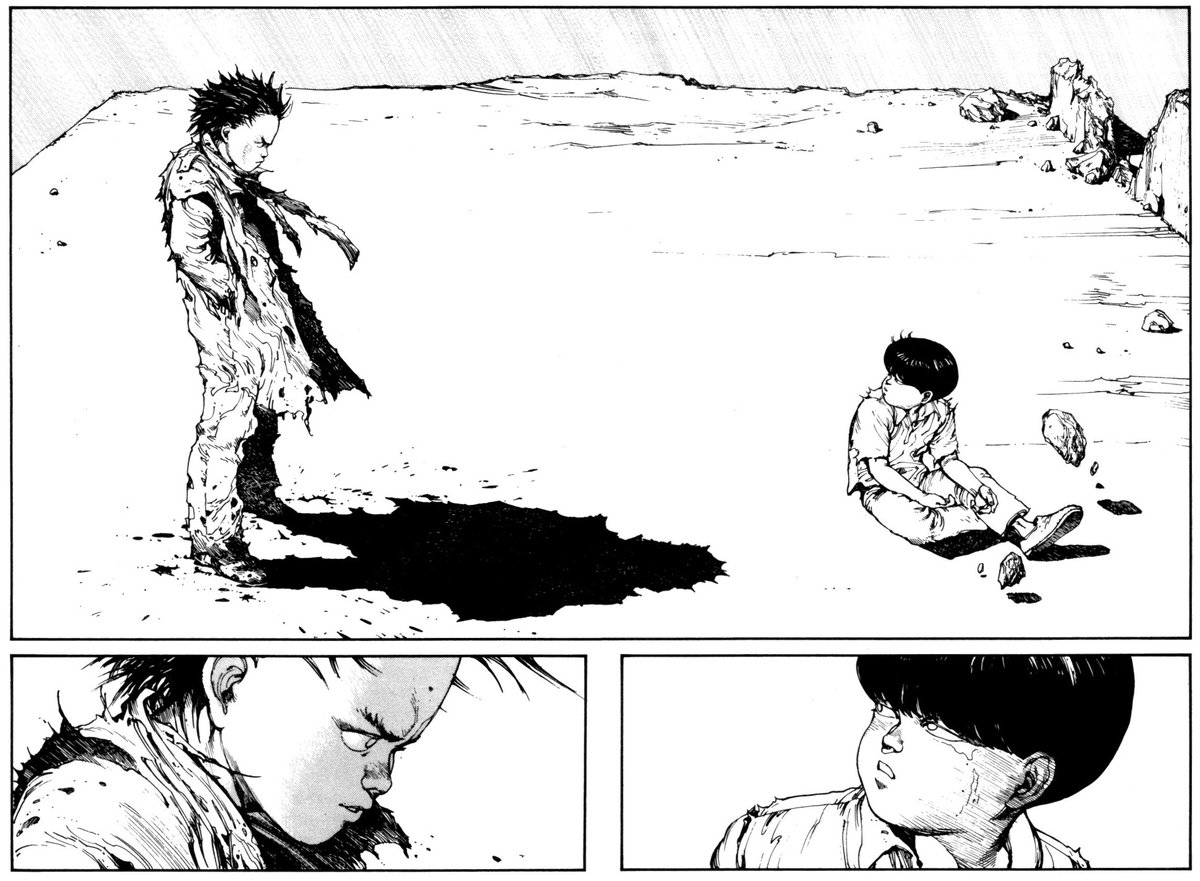
Why AKIRA Still Resonates
Ultimately, AKIRA continues to resonate because its themes never stopped being relevant.
At the center of the story is Tetsuo, a teenager suddenly granted overwhelming psychic power. His transformation is not simply a science fiction spectacle—it is a portrait of insecurity, anger, and isolation spiraling out of control.
The film also reflects deeper anxieties about technology and authority. Secret government experiments, militarized research programs, and political instability all shape the world of Neo-Tokyo.
These concerns—about power, control, and the limits of human ambition—feel just as urgent today as they did in the late 1980s.
That timeless tension is what keeps AKIRA alive.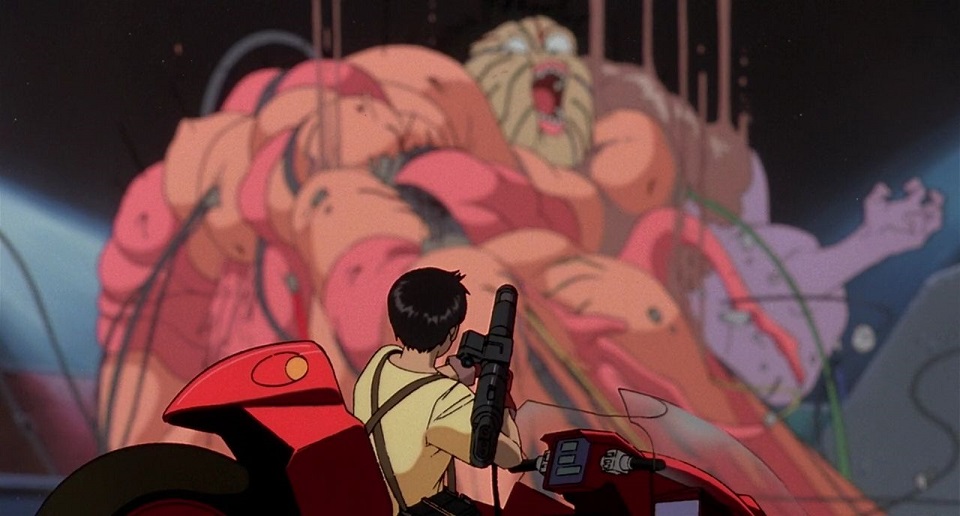
Nearly forty years after its release, AKIRA remains more than a classic animated film.
It is a blueprint for cyberpunk aesthetics, a turning point for global animation, and a story that continues to speak to the anxieties of modern society.
While technology, cities, and culture continue to evolve, the questions at the heart of AKIRA remain unchanged.
What happens when power grows faster than responsibility?
What happens when the future arrives before we are ready for it?
That is why AKIRA still feels like the future.